
We economists often assume a mantle of policy expertise for which we have no qualification, with predictably disastrous outcomes. Even so, thoughtful critics contend that we still retain great influence … and thus continue to cause great harm. But does the fault lie with just a few powerful individuals, or is there a deep flaw in economics that continuously leads its practitioners astray ... I tend to favour the latter hypothesis ... above all, we need to spend more time with philosophers, recapturing the intellectual territory that used to be central to economics.
- Angus Deaton (2022; emphasis added)
My (kindly invited) comment to David Sloan Wilson’s target article will be in a constructive but 'devil's advocate' style. I will thereby focus on what Wilson calls the “dominant paradigm in economics.” I call the latter mechanical economics because it is characterised by a flawed mechanistic worldview which not only erroneously perceives but also dangerously treats the (real) economy as machine, the (financial) market as automaton, and their agents as robots (e.g., Frydman & Goldberg, 2013; Mäki, 2001; Mirowski, 1988). Notice that none have consciousness, which will be central to my comment.
In the spirit of Hayek’s “practical dualism” (1952, p.191), applying the dualist and reflexive nature of mental perception and physical action more generally clarifies that economics as theory is not an innocent bystander but—in virtue of it creating, informing, and justifying practices—has been causal to Wilson’s “multiple crises facing the world”. It consequently also means that I’m sympathetic to Paul Dragos’s normative comment about the need for “appropriate action” that a revitalised paradigm can spawn (although I will not discuss such action here, but see the last paragraph).
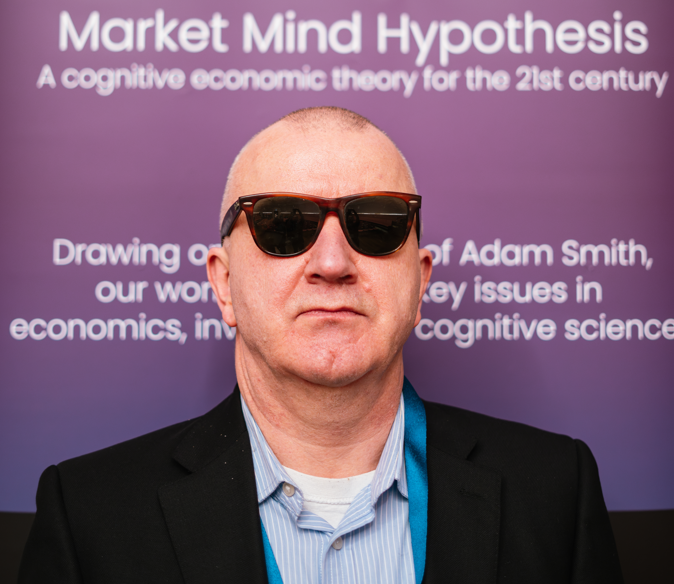
To further frame my angle, following Kuhn, many experts across multiple disciplines have reflected on (new) paradigms. They include Bertalanffy, Capra, Harman, Laszlo, Prigogine, and arguably even Lakatos and Feyerabend. The fact that, decades ago, as a young student, I interned with Harman during which time I also met Capra, explains the inspiration behind my particular interpretation, which informs my Market Mind Hypothesis (or MMH). Among others, the MMH formalises what investors have always casually referred to as the “market mind” (e.g., Soros, 1987). It is informed by 4E cognitive science, which considers the mind to be Embodied, Embedded, Enacted, and Extended, thereby debunking the outdated view of the mind as a mechanical brain-bound computer with some hard- and software.
Harman (1994) highlighted that the paradigm of the natural sciences has a metaphysical stance consisting of objectivism, positivism, and reductionism. Their common denominator is separation, like object/subject, cause/effect, but also man/nature and mind/body. Motivated by physics envy and an obsession with “mathiness” (Romer, 2015), economics swallowed whole this metaphysical stance, leading to “mechanistic monism” (Knight, 1925b, p.251). At the macro-level, it resulted in a separation of the (real) economy and the (imagining) market. For example, ahead of the Global Financial Crisis, the industry-standard Dynamic Stochastic General Equilibrium (DSGE) models failed to include the market (e.g., the banking system). Crucially, as Knight (especially 1925a, 1925b, but starting in 1921) emphasised, it ignored that human agents, first and foremost, are conscious beings. That is, their lived experience (aka phenomenality) as consumers, producers, and investors is pertinent for Wilson’s “sense-making” (see, e.g., Madsbjerg, 2017). Recently, Aumann added his arguments in the revealingly titled “Why Consciousness?” (2024). To paraphrase Nagel (1974), “what it is like to be” a consumer/producer/investor is very real for those agents but is considered epiphenomenal by mechanical economics.
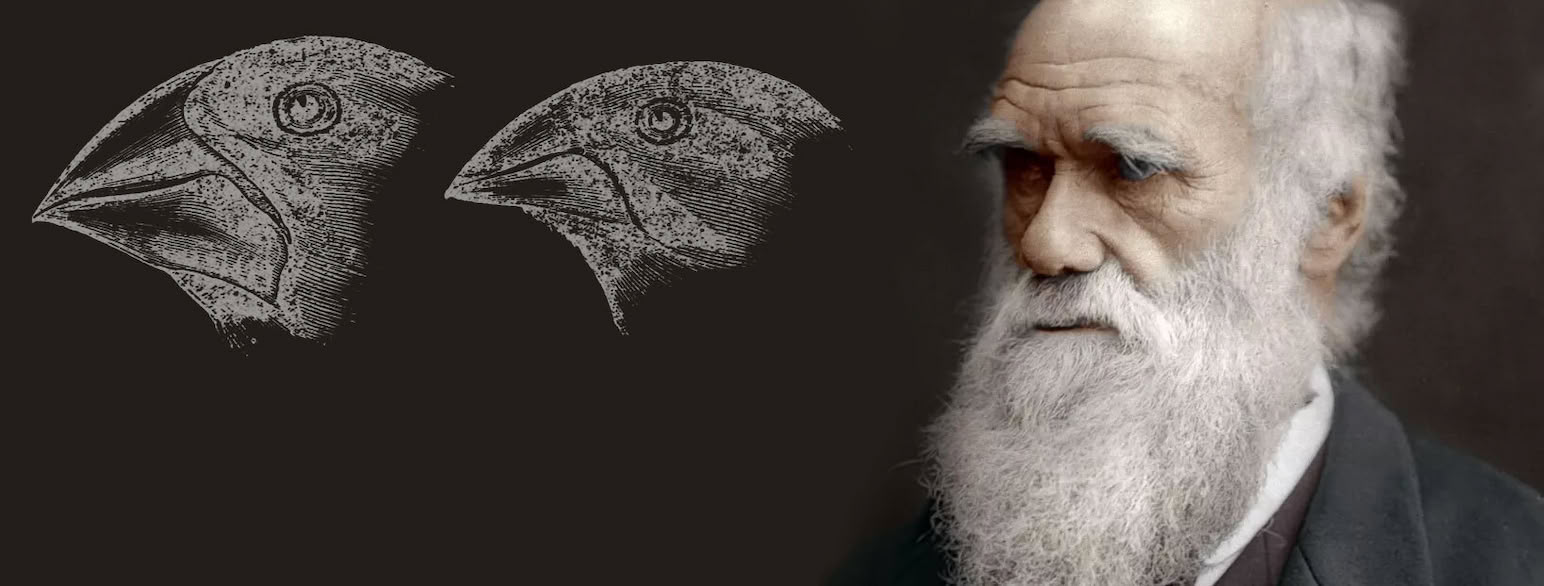
Let me further connect this, first, to Wilson’s evolutionary angle. I like to think of the MMH as revitalizing the paradigm because it highlights the biological/organic grounding of human lived experience (e.g., Nave, 2025). Still, while revising the current paradigm has to be radical (i.e., it has to be "philosophically enormously different", to borrow from Feynman), this does not mean we should throw out the baby with the bathwater. To wit, acknowledging Darwin's admiration for Malthus and Smith, I always like to quote Gould on natural selection, which “is, in essence, Adam Smith’s economics transferred to nature ... Reproductive success becomes analogous to profit” (2002, p.122). Keynes seems to agree on this primacy of economics: “the economic problem, the struggle of subsistence, always has been the most pressing problem ... not only of the human race, but of the whole of the biological kingdom from the beginnings of life in its most primitive forms” (1930, p.361; emphasis added). I bring this up because we “philosophically” need to return to Economics. That is Economics with a bold and capital E, which stands for its Essence. It consists of the core Economic aspects, dynamics, and forces that occur in nature’s “markets,” i.e., in the exchanges within and between both individuals and collectivities of species. These are dualist but complementary and include competition~cooperation, consumption~production, demand~supply, and profit~loss (there are many more; for a general overview, e.g., yin~yang, see Kelso and Engstrøm, 2006). Again, such Economics also occurs in the individual mind~body. For example, Clark points out that “spending metabolic money to build complex brains pays dividends in the search for adaptive [profit]” (2013, p.181, emphasis added). And Seth and Bayne state that “the functional aspects of consciousness concern the role(s) that mental states play in the cognitive economy of an organism” (2020, p.440, emphasis added).
However, we forgot about Economics because these phenomena became abstracted, corrupted, hijacked, reduced, etc. by mechanical economics. The MMH’s Market Mind Principle argues that, instead, such “rightly understood” market dynamics are universal among living systems. It rests on the two-legged premise of (bottom-up, microeconomic) mind-as-market and (top-down, macroeconomic) market-as-mind. For us humans, it means that our minds and markets form an entangled continuum, including extended consciousness (e.g., Telakivi, 2023). What we observe ‘externally’ in the collective markets (due to exchanges between mind~bodies) reflects what happens ‘internally’ in the personal market (due to exchanges within an individual’s mind~body, e.g., among bacteria within your microbiome). Specifically, “the conceptual connections between brains and markets are not merely metaphorical; rather, these two information processing systems can be rigorously compared … [They] share important topological properties” (Vértes et al., 2011, p.1).
Allow me to connect this, next, to the related topic of “libertarianism rightly understood”. I'm mostly interested in the 'cognitive' work of Smith (1759), Knight (1925a, 1925b), Hayek (1952), Simmel (1907), and others—especially their views on consciousness (e.g. Heilbroner, 1973, p.133) and its related mind~body problem (e.g. Mises, 1933). Contemporary economics has always 'conveniently' ignored those reflections, but it is something we can no longer afford: its mechanical worldview fuels mechanisation (now culminating in digitisation, e.g. via AI and cryptos) and is thus directly causal to the crowding out and/or manipulation of consciousness. Symptoms include, at the macro level, the exponential growth in passive and other mechanical investing, which threatens price discovery. Another symptom, at the micro level, is the growing mental health issues due to algorithmic manipulation. While complicated, people are quick in finding an easy scapegoat for our economic predicament: ‘Free markets are the problem.’ However, this is a strawman and misidentifies the cause. It is crucial to understand that throughout human history, markets have never been free but have always been manipulated by powerful parties to seize or maintain control. Pointing this out is not market fundamentalism, nor economic imperialism, nor some political statement. Rather, it is based on 4E cognitive science and highlights the deep connection between minds and markets. According to the Market Mind Principle of the MMH, markets cannot be free if individual minds are not free, and vice versa. In other words, our exchanging individual minds collectively form the market mind, making freedom recursive. This builds on reflections by Bastiat, Mill, Voltaire, and many others throughout history. Specifically, Knight connects consciousness and control in terms of deception (1925a, p.260). If you think Knight’s assessment is harsh, remember Smith’s critique of (monopolist) merchants who “generally have an interest to deceive and even oppress the public” (1776, p.276). All this remains appropriate in our age of AI and social media, with a modern interpretation offered by Harvard’s Zuboff: “surveillance capitalism” (2019). To come back to my main point, informed by 4E cognitive science the MMH posits that “libertarianism rightly understood” is about the ontologically deep connections between 'free minds' and 'free markets'. Mechanical economics threatens this because it makes a category mistake.
Finally, I have sympathy with complexity. However, here too are different approaches, including mechanical ones. For example, I challenged ‘mechanistic’ SFI's David Krakauer—during the Q&A after his recent talk in Edinburgh—by stating that a CAS becomes truly complex (i.e., Wilson’s "CAS2") if conscious beings are its constituents. Krakauer admitted that "we need much more research on this".
To conclude, I opened my comment by quoting from Deaton’s 2022 mea culpa, admitting that there is a “deep flaw” in economics. This flaw is ontological. The MMH identifies it as the mainstream’s blind spot regarding consciousness and ignoring its mind~body problem, which both extend into the economic system. In the context of Wilson’s article, our consciousness has evolved over thousands of years and is the most complex aspect of our mentality. Still, due to the mechanisation in the economic system, promoted by a flawed paradigm, our consciousness is increasingly being crowded out. Fortunately, by integrating 4E cognitive science into Economics we can start to push back as part of our larger endeavour to establish the New Economic Enlightenment in both theory and practice. In my MMH-book (2023), as well as my forthcoming proposal paper, I highlight specific actions. Establishing New Economic Enlightenment is, to quote Dragos, "what ought to be done".
References:
Clark, A., 2013.” Whatever next? Predictive brains, situated agents, and the future of cognitive science”. Behavioral and Brain Sciences, June, 36(3). pp. 181–204.
Frydman, R. and Goldberg, M. 2011. Beyond Mechanical Markets: Asset Price Swings, Risk, and the Role of the State. Princeton: Princeton University Press.
Gould, S. 2002. The Structure of Evolutionary Theory. Cambridge: Harvard University Press.
Harman, W. and Clark, J., eds. 1994. New Metaphysical Foundations of Modern Science. Sausalito: Institute of Noetic Sciences.
Hayek, F. A. von. 1952. The Sensory Order: An Inquiry into the Foundations of Theoretical Psychology. Chicago: The University of Chicago Press, 1976.
Heilbroner, R., 1973. “Economics as a ‘Value-Free’ science”. Social Research, 40(1), pp. 129–143.
Kelso, S. and Engstrøm, D. 2006. The Complementary Nature. Cambridge: MIT Press.
Keynes, J.M. 1930. Essays in Persuasion. New York: Norton.
Knight, F. 1921. Risk, Uncertainty and Profit. Boston: Houghton Mifflin Company.
Knight, F. 1925a. “Economic Psychology and the Value Problem”. The Quarterly Journal of Economics, May, Vol. 39, No. 3, pp. 372–409.
Knight, F. 1925b. “Fact and Metaphysics in Economic Psychology”. American Economic Review, June, Vol. 15, No. 2, pp. 247–266.
Madsbjerg, C. 2017. Sensemaking: The Power of the Humanities in the Age of the Algorithm. New York: Hachette Books.
Mäki, U. 2001. The Economic World View: Studies in the Ontology of Economics. Cambridge: Cambridge University Press.
Mirowski, P., 1988. Against Mechanism: Protecting Economics from Science. Totowa, NJ: Rowman & Littlefield.
Mises, L. von. 1933. Epistemological Problems of Economics. New York: D. Van Nostrand Co. (1960).
Nagel, T. 1974. “What is it like to be a bat?” Philosophical Review, 83, pp. 435–450.
Nave, K. 2024. A Drive to Survive: The Free Energy Principle and the Meaning of Life. Cambridge: MIT Press.
Romer, P., 2015. “Mathiness in the theory of economic growth”. American Economic Review, 5(5), pp. 89–93.
Schotanus, P. 2023. The Market Mind Hypothesis: Understanding Markets and Minds Through Cognitive Economics. Berlin/Boston: DeGruyter.
Seth, A. and Bayne, T. 2020. “Theories of consciousness”. Nature Reviews Neuroscience, 23, pp. 439–452 (2022).
Simmel, G. 1907. The Philosophy of Money. London: Routledge.
Smith, A. 1776. An Inquiry into the Nature and Causes of the Wealth of Nations. London: W. Strahan and T. Cadell.
Soros, G. 1987. The Alchemy of Finance: Reading the Mind of the Market. New York: John Wiley & Sons, Inc.
Telakivi, P. 2023. Extending the Extended Mind: From Cognition to Consciousness. London: Palgrave Macmillan.
Vértes, P., Nicol, R., Chapman, S., Watkins, N., Robertson, D. and E. Bullmore. 2011. “Topological Isomorphisms of Human Brain and Financial Market Networks”. Frontiers in Systems Neuroscience 5:75.
Zuboff, S. 2019. The Age of Surveillance Capitalism: The Fight for a Human Future at the New Frontier of Power. New York: Public Affairs.