


Introduction
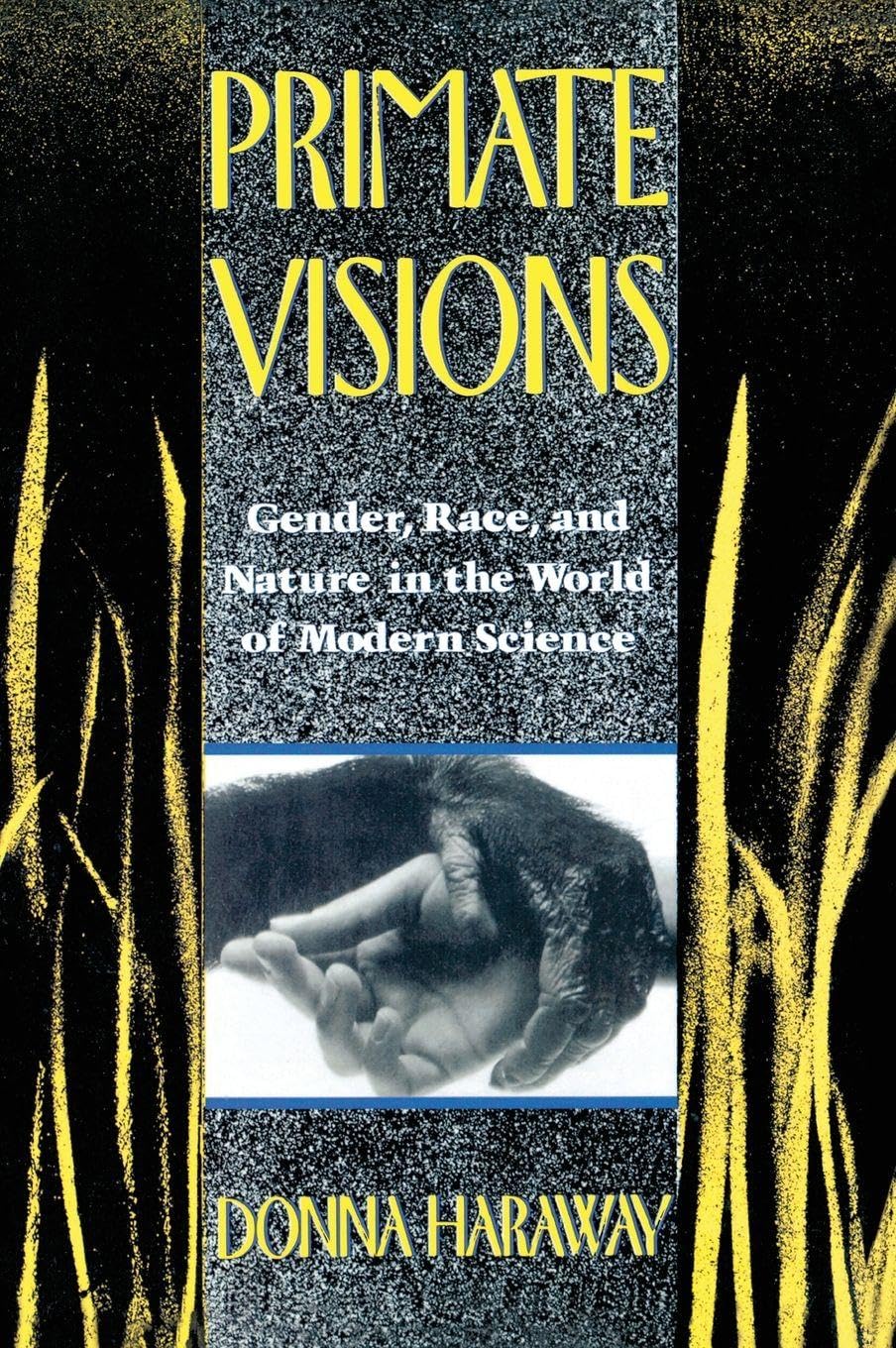
Donna Haraway’s (1989) Primate Visions held up a reflexive lens to primatology, examining how theory and methodology in primate research were situated in the cultural perspectives of researchers studying primates. She examined whether primatology could be considered a “feminist” discipline, drawing on the examples of key female primatologists in exploring how gender shaped the field. Through science and technology studies (STS), a discipline that examines how scientists construct scientific knowledge, Haraway examined how sexism, classism, and racism shaped cultural perspectives of scientific objectivity in 20th century primatology. Her conclusions drew critique among many in evolutionary and biological anthropology; however, some primatologists took her work as a starting point for building an explicitly feminist approach that centered how gendered perspectives shape our understanding of primates. Here, we reflect on these responses, address common misconceptions, and consider how building on these foundations by incorporating queer and decolonial perspectives broadens our understanding of gender and sex in primate behavior. We conclude by considering how ideas about gender and sexuality in primates reflect back on our cultural attitudes about gender/sex in humans.
Situated Perspectives
Haraway’s critique inspired an introspective response by feminist primatologists that incorporated interdisciplinary perspectives from STS, as well as situated cultural perspectives. While modern scientists often characterized themselves as “objective,” this position renders gender, class, and race markings invisible—posing a generally Eurocentric, white male perspective as neutral. Prior to publishing Primate Visions, Haraway published a comprehensive article that defines situated knowledges. Haraway posed that an inherent aim of modern science is to reproduce itself as a dominant knowledge system. The hierarchies and values that shape how researchers translate the world into facts are produced as scientific interpretation, and then this perceived reality is accepted as fact that is reproduced in the production of novel information. However, it is embedded within the dominating hierarchies and values of a Eurocentric, patriarchal system.
Modern science maintains a myth that it provides objective, universal knowledge that represents global facts, yet the information it generates is actually partial, contextual knowledge comprised of the perspectives of those who produce it. Haraway asserts that those who participate in dominant science structures must rely on critical reflexivity to become aware and question objectivity. It requires considering that an objective perspective considers the observers position fixed, and cultural background and identity irrelevant. A critically reflexive position, or a situated perspective, takes into account how the observer’s position shapes their approach to the topic of study and the subsequent construction of knowledge. Situated knowledges from the perspective of oppressed and marginalized positions are particularly valuable for counter-balancing the dominant structures.
In Primate Visions, Haraway applies situated knowledges to primatology. Here, it is the paradigm of Darwinian evolutionary biology that is reproduced with the concepts of competition and fitness as interpretations of nature. This reproduction of binaries upheld a fixation on framing nature around opposing binaries. Key binaries include Man vs. Woman, and Society vs. Nature, competing in an inherently unbalanced competition to reproduce and survive. For primatologists studying evolution through natural selection, this narrative begins with the imbalance of energetic costs between the egg and the sperm, embodied in two sexes, competing in an economy of resources for evolutionary fitness. Through historical analyses, Haraway demonstrates how these binaries and values reinforce sexism, classism, and racism, first reinforcing the concept of the nuclear family specific to white, Christian, wealthy, Eurocentric audiences, to then stabilizing a universal concept of man for global audiences that normalized heterocolonial values and hierarchies.
Subsequently, Haraway interrogated whether primatology could be considered a feminist discipline, suggesting that many primatologists engage in a feminist approach, yet their effectiveness in disrupting and destabilizing a patriarchal colonial lens still varies. Increasing women’s participation in primatology and expanding the number of women authoring scientific work have helped integrate feminist perspectives, but there remain challenges among their successes. Primatology still requires further efforts to improve and diversify access for LGBTQ+ and other cultural perspectives for greater clarity on the complex dynamic of primate lives.
Responses and Misconceptions
Some feminist primatologists took up Haraway’s charge and integrated it into their own research, highlighting the role of female primatologists in understanding female primate agency and exploring gendered and cultural perspectives on primatology. This work also included re-examining Bateman’s paradigm, highlighting the role of female dominance in lemurs, and questioning the inconsistency in measuring dominance and power in primates. Another group of researchers distinguished themselves as “Darwinian feminists,” in an attempt to bridge a perceived gap between feminism and the biological sciences. Informed by second-wave feminism and male-dominated research and theories of evolution, some researchers adopted this term to characterize a feminist approach to evolutionary perspectives. This framing stood in contrast to cultural backlash against sexist and reductive framings of evolution that emerged from sociobiology and evolutionary psychology. Darwinian feminists argued that gene-centric models of evolution did not account for variation and plasticity and drew attention to the active roles that female animals play in evolution. However, they stood in contrast to feminist scholars who highlighted how the theories themselves were constructed from subjective standpoints, specifically from the bias that subjectifies females as the opposing binary to males in the competition of fitness and survival.
Others recognized adjacent concerns to feminist primatologists in trends of data collection that reduce the multiplicity of knowledges and knowledge-sharing networks. Qualitative and natural history data, as well as the relationships individuals have with research subjects, have historically been dismissed as not being objective enough. The reliance on restrictive systems of validity in science constructs barriers to establishing novel observations as credible. There are also recent declines in qualitative and narrative-based methodologies in favor of larger, coded data sets, which is forewarned to create even more barriers to who can gain the technical training to be proficient in such a narrow mode of knowledge production. These dynamics inhibited reporting of widely-observed same-sex sexual behaviors and have broadly invalidated Indigenous and regional knowledges concerning primate ecology. Primatology as a global knowledge remains dominated by Eurocentric lineages of science that continue to structurally challenge the validation of knowledge from the margins. For example, the Euro-American tradition delayed acknowledging Japanese traditions in primatology, despite these traditions emerging simultaneously.
Demonstrated by Primate Visions’ reception three decades ago, there was serious pushback against the suggestion that one might take feminist approaches to primatology, which was seen as unscientific. STS scholars investigate the relationship between science and society. It is often an anthropological study of science that does not shy away from the principle that science, or knowledge production broadly, is a human practice that is not immune to being a cultural phenomenon. Many critics misinterpret Haraway’s book as a relativist perspective, which assumes Haraway was understanding primatology under the same paradigms and methods as primatologists use to understand primates, subsequently arguing her facts were subjective, less credible, or not rigorous under the same standard. Some of these misunderstandings may have arisen from the fact that Haraway’s text is rather dense and obscure, reflecting a writing style within the humanities that encourages close, careful, and reflective reading. However, they nonetheless reflect a misunderstanding of STS scholarship and point to a limitation in biologically-oriented researchers’ background in reading humanistic texts. It was not Haraway’s aim to deny or challenge the reality of primatologists or primatological knowledge. Haraway’s work is an anthropological examination of how primatologists systematically and structurally construct primatological knowledge given the hegemonic cultural, social, and political contexts of primatologists. This work aimed to critically examine how primatological science intersects and engages with society, unveiling the unmarked, invisible structures of classism, racism, and sexism that reinforce heterocolonial dominance under the guise of universal, neutral observations.
We propose that it is crucial to recognize where situated perspectives come from and to share the interpretive lenses that we are using. Feminist primatologists foreground their own positionality as helpful in interpreting their research, especially given the norm where such information is typically unmarked when primatologists posit theories on the evolution of male sexual coercion, aggression, and dominance. Much of the presentations of feminist primatology positioned cisgender women as an alternative to this normative position, without interrogating other aspects of positionality, such as race, ethnicity, sexual identity, class, or nationality. Positionality is dynamic and multifaceted, as we each hold multiple identities that can shift over time and space, and in relation to the topics we are addressing. Field primatology is particularly nuanced because the production of knowledge through multinational collaborations requires shifting identity across numerous geographic, political, and social contexts.
Additionally, a crucial aspect of considering our situated perspectives is recognizing how they shape our relationship to the topics we are interacting with, which can include reflexively taking perspectives beyond our own. Identity alone does not convey a feminist, queer, or decolonial perspective; in fact, those in tokenized positions may feel greater pressure to assimilate to dominant cultural paradigms. Furthermore, those of dominant identities can learn from and adopt theoretical perspectives developed by scholars working from marginalized positions, particularly local researchers. Nonetheless, recognizing our own positionalities--and the biases that come from those positions--makes us aware of how they shape our approach to research. Sufficient representation of marginalized identities, beyond tokenistic inclusion, is crucial to providing perspectives that were previously lacking.
Building on Feminist Primatology
While primatology successfully integrated the feminist dimension of Haraway’s critiques, it has largely failed to take up her critique of primatology’s racial and colonial underpinnings. Global primatology literature continues to be subject to Euro-American biases, due to the precedent of English as the primary language of scientific communication; the relative power and funding imbalances in imperialistic nations compared to many primate-range countries; and the predominance of well-resourced primatologists from Europe and North America. Risks and fears of extinction, a threat many primate populations face, shape the need to address conservation in addition to primate studies. Researchers must actively work to dismantle existing power injustices and to incorporate equitable frameworks that interrogate how researcher positionality shapes our research. Research coming from dominant cultural paradigms may project Euro-American conceptions of gender and sexuality, which furthers the erasure of the diverse global constructions of these identities that accompanied the colonial imposition of European cultural norms. Additionally, scientific paradigms that prioritize taxonomic focus have led primatologists to focus on primates apart from the embedded relationships they have with other animals, plants, and humans in an integrated whole. For example, macaques in urban ecology are frequently described as being ecological or zoonotic threats and framed as a disruption to the ideals that divide humans and nature. However, this Eurocentric binary may invalidate local religious and cultural relationships with macaques. Cultural worldviews that consider all species within a web of interconnected relationships can counter this taxonomic focus that takes primates out of their broader context.
When women took feminist approaches to primatology, our field’s understanding of female primate sexuality and sociality exploded. In taking a queer approach to primatology, we may experience another renewal of research questions around a more diverse range of sexual and social experiences. Explicitly queer and feminist approaches inspire testable hypotheses. Such hypotheses can provide a counterbalance to those that center the role of males and gendered paradigms. However, this focus on gender (or sex in our nonhuman study subjects, though arguably gender is not unique to humans) has remained quite binary and heteronormative. Queerness expands our perspectives, approaches, and questions. Researchers with queer identities bringing an interest in understanding the evolution of sexual and gender diversity in nature can be transformative in both destabilizing paradigms with limited explanatory power, but also in reconstructing new scientific paradigms. With this in mind, we also highlight that we should be careful of projecting assumptions of allosexuality – perspectives from asexual researchers may be especially useful in interrogating assumptions of sexuality that assume sex as a primary motivator for all members of a species, rather than another spectrum of variation.
Enmeshed in the Eurocentric, Christian worldviews of the dominant scientific paradigm are heteronormative, gendered constructs of “women” and “men” that are projected into the literature on sexual behavior and sexual selection within evolutionary biology and animal behavior. Victorian gendered norms further permeate the development of evolutionary literature, dating back to Darwin’s Descent of Man. Through colonialism, these concepts of gender and sexuality were exported and enculturated as an attempt at cultural suppression of diverse gender and sexuality concepts. Thus, part of the work of undoing colonialist science requires recognizing both how these gendered norms are culturally situated and how they have shaped scientific ideas about gender, sexuality, and human nature.
Reflexivity in Understanding Primates and Ourselves
Our views of primate behavior reflect back on us and our culturally-grounded perceptions of human nature. Just as feminist primatologists changed the picture from that of the active, dominant males and passive, submissive females to one that prioritizes female agency, our changing views on gendered norms and sexual diversity can change our understanding of sex and sexuality in primates. Promoting queer and decolonial perspectives today cannot rely on modes of inclusion alone, especially at the risk of assimilation or exploitation by norms of heterocolonial structures that endure in modern primatology. Primate Visions serves as a practice of critical reflexivity in primatology to illuminate the structures and systems of classism, sexism, and racism that subversively perpetuate heterocolonial norms, especially among those who have been most privileged and empowered by these norms. The misunderstanding and criticism posited towards Haraway’s work 30 years ago demonstrate the challenges of questioning how scientists construct science. This struggle has been made even more challenging today as many scientific programs have experienced severe financial budget cuts and threats amid the rise of authoritarianism, particularly within the US context. Additional social policy changes, threats, and violations against human rights, especially toward LGBTQ+, Indigenous, and racialized minorities, create numerous barriers for people to participate and remain in spaces of science. These barriers pose risks to undoing the progress we have made in building queer and decolonial approaches to gender and sexuality, and increase risks of reifying a politicized ideal of the sex/gender binary. As Haraway noted in an earlier paper, Primatology is Politics by Other Means. The work of primatology and evolutionary biology is inherently political, and we cannot shy away from the multidirectional relationships our research has with our sociocultural and political contexts.