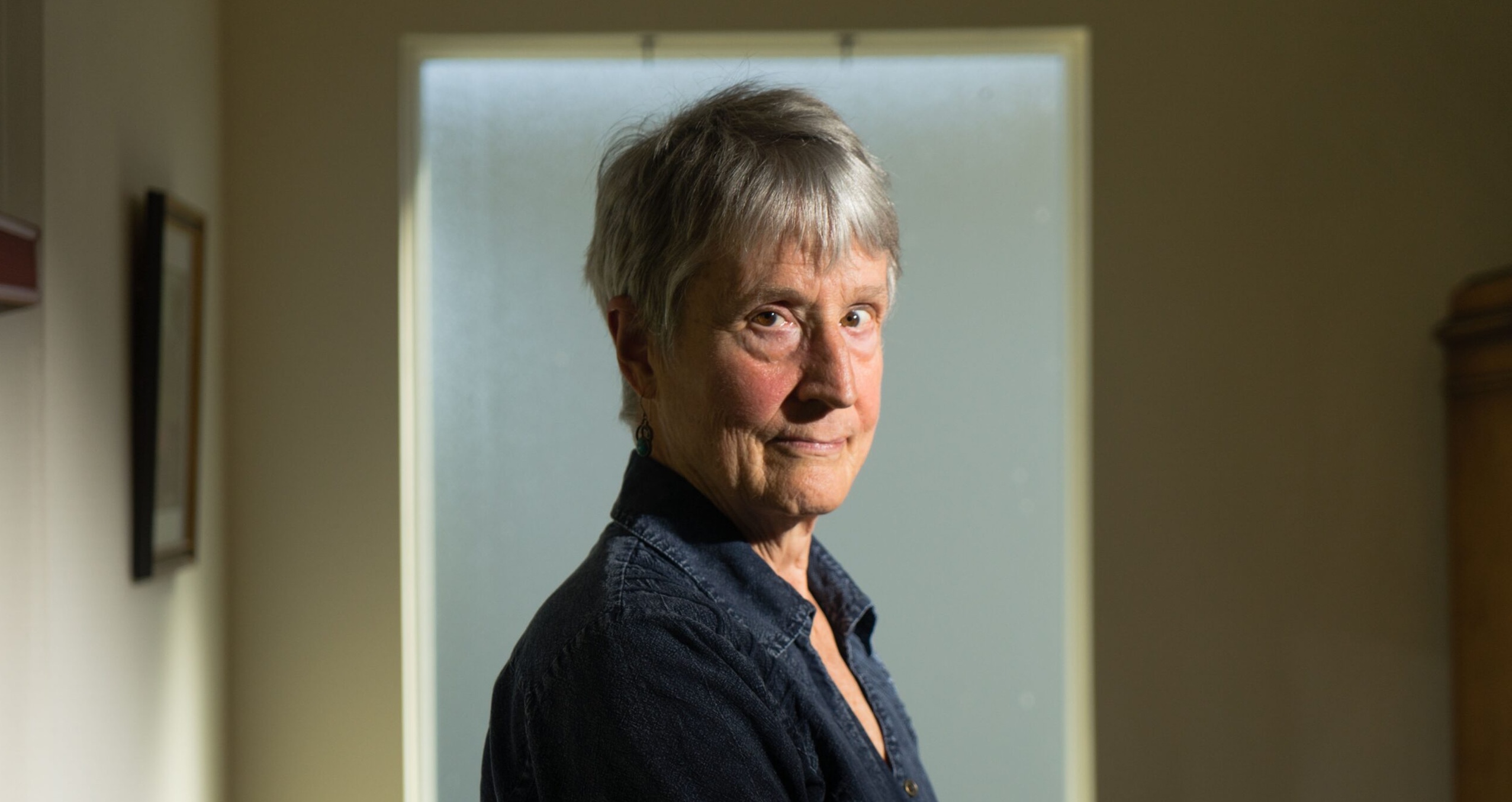
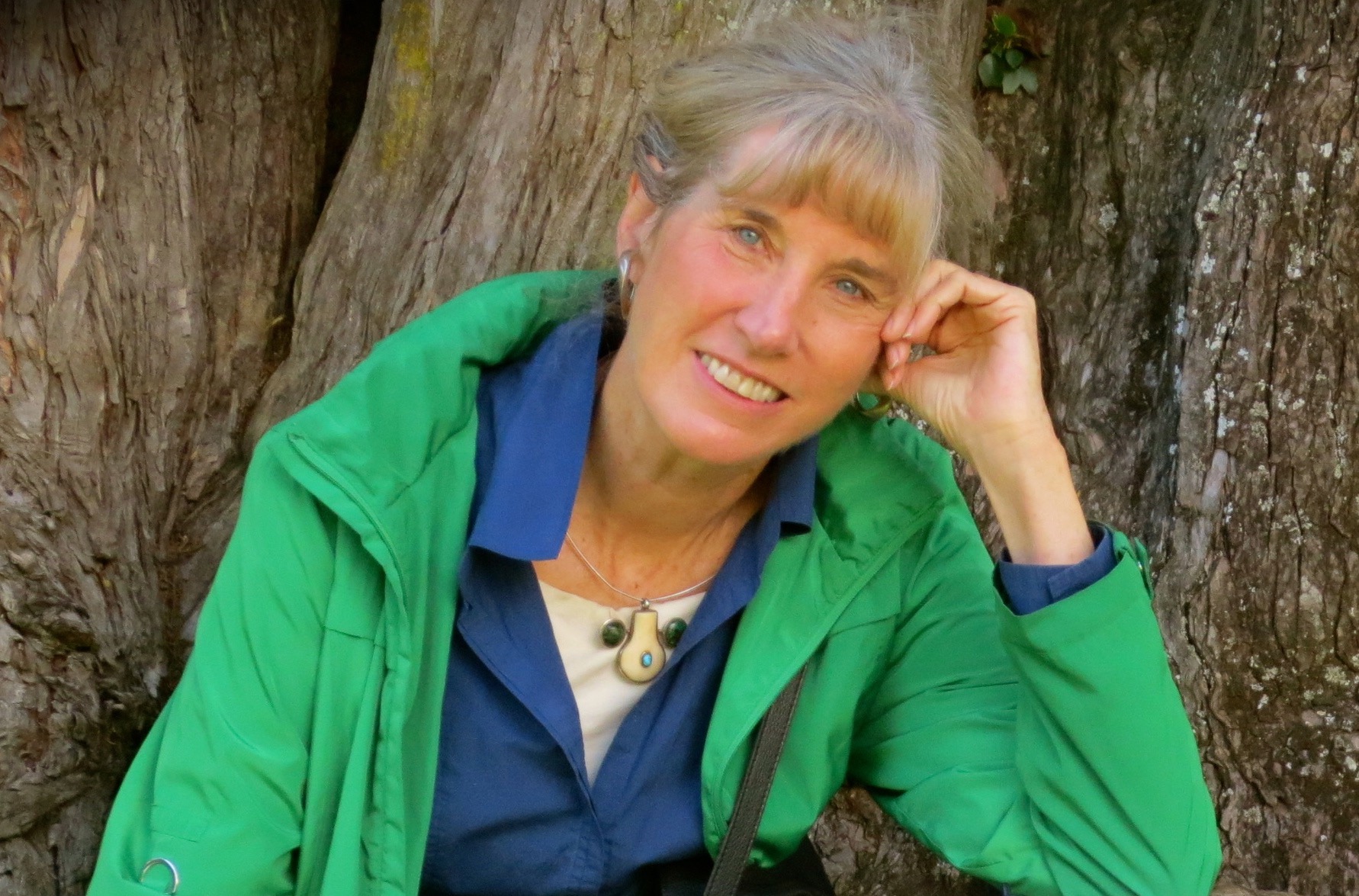

Sarah Hrdy never intended to be a radical, but she has nevertheless had a radical influence on how primatology and evolutionary biology address female strategies as well as the evolutionary influences on infants. Hrdy graduated summa cum laude from Radcliffe College in Cambridge, Massachusetts and received her Ph.D. in anthropology from Harvard. She is a former Guggenheim fellow and a member of the National Academy of Sciences, the American Academy of Arts and Sciences, and the California Academy of Sciences. She is currently professor emeritus at the University of California, Davis.
In our discussion, Hrdy explores both her own life as well as how her personal experiences inspired her to ask different questions than many of her scientific colleagues. While it may not seem like a particularly dramatic idea to emphasize the evolutionary selection pressures on mothers and their offspring, it is a telling insight into the unconscious (and at times fully conscious) sexism that has long been a part of the scientific process. Through her work, in books such as The Woman that Never Evolved, selected by the New York Times as one of its Notable Books of 1981, Mother Nature: A History of Mothers, Infants and Natural Selection, chosen by both Publisher's Weekly and Library Journal as one of the "Best Books of 1999," Mothers and Others: The Evolutionary Origins of Mutual Understanding, and, her latest, Father Time: A Natural History of Men and Babies, Hrdy has challenged, and transcended, many of the flawed assumptions that biologists have held dating back to the Victorian era. It is a body of work that continues to provoke and inspire a new generation of scientists and was highly influential in my own scientific work.
Eric Michael Johnson: Why do you think it’s important to look at mothers and infants from an evolutionary perspective?
Sarah Blaffer Hrdy: If we really want to raise Darwin’s consciousness we need to expand evolutionary perspectives to include the Darwinian selection pressures on mothers and on infants. So much of our human narrative is about selection pressures but, when you stop to think and parse the hypotheses, they’re really about selection pressures on males: hunting hypotheses or lethal intergroup conflict hypotheses to explain human brains. Well, does that mean that females don’t have brains?
Johnson: In an autobiographical sketch published in the book Leaders in Animal Behavior you wrote that: “It was no accident that I would later become interested in the evolutionary and historical origins of patrilocal marriage, male-biased inheritance, female sexuality and peoples’ obsessive concerns with controlling it.” When did you start becoming interested in these topics and what were some of the leading motivations you had at the time?
Hrdy: You have to take into account where I grew up and when. It was in south Texas. I was born in 1946 so I was growing up in the 50s. This was a very segregated and really quite patriarchal society. Growing up in Houston was a lot like growing up in South Africa. Also within my family males had a very special role. The good news, in a way, is that I was the third daughter born in a family eventually of five. It was a very wealthy family and I was sort of the heiress to spare. So they didn’t pay too much attention to what I was doing, though they certainly had very set ideas about who I should marry and what sort of life I should lead. But once I was out of sight off at school, I was pretty much out of mind which was good for me. So I went off to school when I was 16 and that really was the beginning I think of my intellectual development.
Johnson: This was during the midst of what Betty Friedan later called "the feminine mystique." In what ways did you see this dissatisfaction at play in the women around you? How did you interpret this as a girl when looking to grownups for a model of womanhood?
Hrdy: Oh Eric, I was so clueless. I didn’t understand. I had no political awareness at all. I was really finding it out for myself. I still recall sitting in a simian seminar at Harvard and the discussion revolved around women being exchanged between groups as a way of connecting male brotherhoods and achieving alliances between groups. I remember thinking to myself, “This is what it must be like to be a black person listening to a lecture in support of the Ku Klux Klan.” I had no sense of the culture I’d grown up in and the way women were regarded within it. I had no sense of what this was really about and how it was working. I was learning from politically more aware people around me who, I think, often were stunned at my naiveté. At that time primate behavior and the whole evolutionary endeavor was steeped in these very Victorian preconceptions. So I was reacting, at a very visceral level, even before I realized what was going on.
Johnson: And when you entered college?
Hrdy: The year I graduated [from Radcliffe in 1969] there was not a single woman professor at Harvard and I was my professor’s first woman graduate student. Female role models, especially in the sciences, were almost nonexistent. Moving closer to biology was a different thing for me than being an undergraduate in cultural anthropology. The dominant narrative about primate social lives was the savannah baboon where males are very political and dominant and they would support each other so they could control females. Are you familiar with those stories?
Johnson: Of course, that was one of the dominant paradigms for human evolution at the time.
Hrdy: And it was. That’s what I was hearing and that’s what I was responding to. There was really no consideration of how much variation existed among females. Remember, the models back then held that there was variance in male's reproductive success and no variance in female's. It was assumed every female would be a mother and would breed to the maximum of her capacity so that females would be producing about the same number of offspring each whereas, with males, they could do tremendously well or be a complete zero -- what was referred to as "the Bateman paradigm". Supposedly, because the ovary was bigger and more resource rich than the sperm, it meant there were many tiny sperm actively competing for a large, resource rich ovum. This was the basis for the assumption that there was stronger selection pressure on males than on females.
Johnson: What led you to question this paradigm?
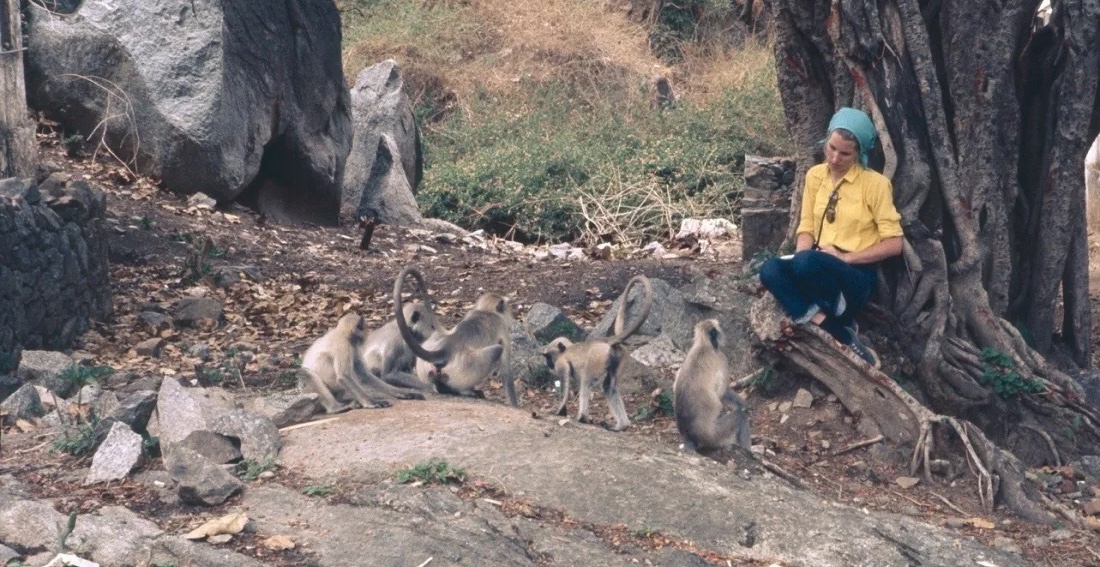
Hrdy: It was after I started studying langur monkeys that it began to dawn on me how many sources of variation in female reproductive success there were. It brought the old paradigm into question. For so long it had been assumed that males were basically polygynous [many sexual partners] while females were monandrous [one sexual partner]. Watching langurs convinced me that this was not true. When I examined the wider literature I realized just how common polyandrous mating by females actually was across primates. Now we realize it’s not just primates, it’s across the animal kingdom.
This was all starting to emerge at the time and it really gelled for me in a paper I prepared for the first (and really only) overtly feminist conference I ever attended organized by Ruth Bleier in 1985. Almost none of my colleagues from biology read that essay -- “Empathy, Polyandry, and the Myth of the Coy Female” at the time, but it was recently republished in Elliot Sober’s Conceptual Issues in Evolutionary Biology [pp. 131-160]. The essay was about how inapplicable, or wrongly applied, the Bateman paradigm was. There was so much more selection on females to mate with multiple males for a variety of reasons, from genetic reasons to extracting more investment, or confusing the issue of paternity. By the 1970s, I recognized that paternity confusion was what was going on with langurs. But this was heresy back then. Now I think it’s widely accepted. I think the history and the feminist provenance of this idea has been forgotten which, in a way, is too bad because we know what happens when you forget history, old mistakes get repeated, old biases reinserted. I see no reason why some of these same biases couldn’t come back in other forms just as appears to be happening in our political sphere today.
Johnson: You have written about how patrilocal residence patterns significantly impacts women’s sexual choices in favor of men. In contrast, matrilocal societies are more likely to be egalitarian. What are the factors that lead to the differences between these two systems?
Hrdy: I think in societies where women have more say, and that does tend to be in societies that are matrilocal and with matrilineal descent or where, as it is among many small scale hunter-gatherers, you have porous social boundaries and flexible residence patterns. If I had to say what kind of residence patterns our ancestors had it would have been very flexible, what Frank Marlowe calls multilocal. This means they were sometimes matrilocal and living with a woman’s family, or sometimes patrilocal and living with a man’s family. Or sometimes they weren’t living with either family because they could vote with their feet and move away if someone was being oppressive. I think these porous boundaries and flexible residence patterns were very important for our ancestors. But, over time, as populations built up and property became much more important—and it also becomes important to defend property—that’s when it became much harder to move between groups. The boundaries became less porous but also men would tend to stay together. Sons would stay near where their brothers and fathers were because they made the best allies for defending a particular resource.
As I suspect you know, I am convinced that until fairly recently in human history–-and of course, for me, recent means 10-20,000 years ago–-people weren’t defending resources. The ranging areas were so large that is very difficult to imagine anyone defending them. There was also no property, so they weren’t defending that either. Some people have argued that they were defending women because men are always going to be looking for extra wives and extra women to mate with. But the thing is, among hunter-gatherers, the way to breed successfully is having alloparental help and provisioning help from others. Anybody who goes around killing off his wife’s relatives and stealing women is going to have a lower chance of rearing offspring. These warring bands of brothers didn’t emerge until fairly recently, after people started to become more sedentary. For these reasons, I think our hunter-gatherer ancestors had a flexible residence pattern and that group boundaries were porous.
Johnson: As you argue in your latest book, Mothers and Others, humans evolved as cooperative breeders. However, most psychology studies (and nearly all parenting advice books) assume that the nuclear family is integral to human nature. How does this assumption influence the kind of advice parents receive?
Hrdy: By the time I was finishing Mother Nature I had realized that there was simply no way an ape with the life history traits observed in humans could have evolved unless our ancestors had been cooperative breeders. By this I mean a species where alloparents, individuals other than the parents, had helped to care for and also provision the youngsters. That’s the best explanation for the life history traits that you have in humans, these very long periods of dependency that anthropologists studying hunter-gatherers have documented. In other apes, once youngsters are weaned they’re basically nutritionally independent. But in humans offspring are going to be between 18-20 years old before they are producing as many calories as they’re consuming. So the dependency is lasting a very long time. Hillard Kaplan’s work has been very important to me. He estimates that it takes 13 million calories to rear a human from birth to nutritional independence and this is far more than a woman could provide by herself. Furthermore, the work of anthropologists like Kristen Hawkes and James O’Connell have shown that it would take more than both the mother and the father could have provided.
Johnson: So who was helping?
Hrdy: That’s where different emphases are being proposed and I take the view that it’s very opportunistic and mothers are getting help wherever they can. It can come from grandmothers, as Kristen Hawkes has stressed, and post-reproductive females. It can also come from fathers and males that might be the fathers, from patrilineal relatives, matrilineal relatives, older siblings, aunts, uncles, and even sometimes nonrelatives who happen to be in the group who are earning their keep by helping to rear the youngsters. It would be a varied assortment of helpers, albeit group members very familiar to the child.
Johnson: How could this human past help us today to design more compatible childrearing systems that are more geared to the needs of children?
Hrdy: What we learned from Bowlby, who’s been so important to me with attachment theory, is that children need this sense of security that comes from having close relationships from people around them. But where I depart from Bowlby is in assuming that the mother is the sole attachment figure. Of course, later, Bowlby did correct himself somewhat under the influence of Mary Ainsworth, so I want to give Bowlby credit for changing his views over the course of his career. But, for the most part, he was convinced that the mother was more than the primary caretaker, she was the one that mattered most. As a consequence, most studies of attachment theory focused on the infant's relationship with the mother. Yet a handful of studies that actually looked, noted that children with multiple attachment figures are better able to integrate the perspectives of multiple people. Marinus von IJzendoorn and Avi Sagi-Schwartz’s work has been especially important to me in this regards. Perspective taking is one of the key differences between humans and some of our closest ape relatives. We don’t really know whether a child who has, for example, equal amounts of care from the mother and the grandmother or more caretaking from the father can’t be just as secure with that person as with the mother. However, I predict that they would.
Johnson: How does the assumption of the standard nuclear family affect the kinds of approaches that humans have towards parenting? If, as you say, we have evolved as cooperative breeders?
Hrdy: I don’t think it can be separated from patriarchal traditions. A woman living in a patrilocal setting is surrounded by her husband’s people. She’s a fairly isolated figure and her role is going to be, essentially, a breeding machine for the patriline. She won’t have social support within her husband’s community. Out of that long tradition there emerges this view of the mother as an all-giving, totally dedicated creature who turns herself over to her children. I went back and read some of the early stereotypical views of motherhood in Western Europe and all of them were conflated with notions of charity and a woman giving of herself as the model for what a woman should be. If you stop to think about this you realize that these are all from the perspective of the patriline and the male’s perspective. It’s really not taking into account the woman’s perspective.
Eric Michael Johnson: You made a difficult decision, just before you got your offer to write Mother Nature, to choose a different life-work balance than the standard tenure track career. How was your work in primatology influencing your decisions as you were thinking about family life and having children?
Sarah Blaffer Hrdy: In 1986 I actually submitted a proposal to the Guggenheim foundation to write a book on the natural history of mothering. So I was already thinking about it. I was 41 and that was also the year that my third child, Niko, was born and, I’m sure this won’t surprise you Eric, but the book on the natural history of motherhood did not get written that year. I wrote a paper on delegating maternal care, the wet nursing paper, but I didn’t even come close to getting a book written. I had three children and then my brother and mother died within a year of each other. As my mother was dying I was very torn between the needs of my children and my job back in California. I was very close to her and she needed me in Texas. I began to suffer all of these psychosomatic illnesses such as back and neck pain, migraines. It was not working for me. Plus I had always wanted to be a writer, like you I think.
Johnson: Yes.
Hrdy: The balance of my life did not feel right. Furthermore, the state of my field was such that teaching in an anthropology department was not bringing me a whole lot of satisfaction. It’s so hard to talk about it and tell the truth because there were so many different angles to it. But, basically, I wrote a book proposal, submitted it to publishers, there was an auction, the book was sold, and I immediately resigned from the university. I was offered to take the status of Professor Emerita, which I thought was an attractive offer. It didn’t come with any pension or medical benefits but, because my work had been so controversial, it was a way for me to quit with dignity. So that’s what I did. That was 1996 and the next three years I didn’t do anything except write and attend to my family (and, as you know, just because they’re not babies anymore doesn’t mean they don’t need a lot of attention).
Johnson: I know that all too well. You were mentioning earlier the importance of attachment in child development. How do you see that playing out today?
Hrdy: Remember that terrible case of Andrea Yates, the mother who was left on her own when she was already suffering from postpartum depression? She may have even been suffering from worse mental conditions that that. I think she had five children under the age of 8. One day she completely loses it and kills her kids and in Texas she’s sent to prison. The focus was on how awful this was, and, of course it was awful. But there was no deeper questioning. What was this mother--already identified as suffering psychological duress--doing alone with five children without social or institutional support of any kind? We have forgotten to put events like these murders into a larger perspective.
I think it’s starting to come back in sociologically informed circles to recognize just how much social support mothers in our species need. But it’s certainly not generally recognized at the level, for example, of politicians who are still out there talking about how they know children are healthier when they’re reared with a mother who is married to their father. We have these powerful social prescriptions about this with really no data to back it up. To say that a married mother with children is actually better off than a single mother with just one person taking care of the kids, well duh, that’s obvious. But we don’t know, for example, that those children are better off than they would be if they were in a family with a mother and a father and a grandmother and nieces and nephews in the family, or if they were better off with a grandmother, an aunt, and a mother. We really don’t know because those aren’t the kinds of studies we’ve done. The studies have all looked at married versus unmarried or nuclear family versus single mother.
We need to do much more before we can make these kinds of claims. Judges are making decisions about whether or not children can be in a particular school or who can have custody of children depending on this assumption that children are better off in certain kinds of family configurations. But there is so little science actually informing these pronouncements. Historians of the family and many social workers have felt for a long time that children actually do better in extended families. So I’m rather pleased to notice, as we are coming out of this terrible recession and collapse of the housing market, that one of the few bright areas in the housing market are the multifamily houses or apartments being built. There are actually special rooms so that in-laws or grandparents can live with nuclear families. I think part of the reason for this is, of course, financial since people are struggling to pay their rent or mortgage. But I also think there’s a recognition that these extra people are playing a very important role in providing the kind of nurturing environment that our children need. I’m glad to see that.
Johnson: Are there other societies that have also recognized this?
Hrdy: Actually, yes. For example, in countries like Mexico they still have very intact traditions of extended family. However, like us, and for the same reasons, they are moving away from that. It’s really too bad. But our economic environment is set up for people to move where they can get jobs and our housing configurations aren’t designed for living with kin or in close contact with other family members. We seem to have a greater concern with privacy and owning individual homes surrounded by their own yards. They’re really not conducive to what children need.
Johnson: What happens?
Hrdy: Well, for one thing, a lot of child abuse and neglect. It’s probably increasing, but when I say increasing you have to pay attention to what I take as my starting point. If you’re starting from medieval times, I think children are being treated much better today. We don’t swaddle babies and hang them from a door while mothers and other family members go out to the fields to work, hang them up so they won’t fall in the fire or get eaten by pigs. Thankfully we don’t see the level of neglect like there was in, for example, 18th century France that I describe in Mother Nature, where babies are being sent off to wet nurses in the country then (if against the odds they survived) wrenched away and returned to a mother they barely knew. Compared to earlier phases in Western civilization children are better off today. But not compared to our Pleistocene ancestors. Child survival rates are exponentially higher today. That’s true. But those children who did survive back then were actually much better off in terms of the kind of nurturing environment that they experienced. Rates of child mortality were high, but there was no child abuse or emotional neglect. A child that has experienced the kind of emotional neglect it takes to produce the psychopathology of insecure attachment, the kind shown in Bowlby and Harlow’s work, simply would not have survived. Parents and other group members are very sensitive to anything that would threaten a child’s survival.
If you look at the ethnographic accounts of band-level hunter-gatherer in Africa or Melanesia—though I’m not sure I can say this for South America—what jumps out at you is the indulgence towards children. Child abuse would not have been tolerated. Other group members would have intervened, the perpetrators socially ostracized, possibly even expelled from the group if they harmed a child. It was not acceptable. We don’t have this same sensibility today for a number of reasons. I think we have an epidemic of emotional neglect of children today that has gone completely unrecognised.
Johnson: Why do you think cooperative breeding disappeared as a parenting strategy?
Hrdy: I think what disappeared was the flexibility in residence for women. I think as hunter-gatherer groups became larger and more complex people had to begin defending the more compressed territories where they made their living. This was certainly the case with the Neolithic revolution and the invention of agriculture. Over time, as populations built up, as property became much more important—and it also became important to defend property—that’s when boundaries became less porous and men stayed together. To defend fixed areas it made sense to remain near brothers and fathers. Male kin alliances became much more important. Then I think two things happened: Women were moving between groups to places where they didn’t have matrilineal relatives and men were staying put, which changes the balance of power in all sorts of family relationships. But you also had group boundaries that were no longer as porous as they had been. This meant that a woman couldn’t simply take her children and leave to be near her kin if she wasn’t being well treated. I think that was the first big transition, women lost their autonomy over their own childrearing assets. And, of course, with patrilocality and the influence of patrilineal descent, you begin to have a concern with female chastity so that it really matters if a woman “goes off alone.” Not only are women losing but children are taking it on the chin.
Johnson: In what ways did this play out? What was the effect on women and children?
Hrdy: Consider the customs in very patriarchal societies, like the practice of suttee in parts of India, where after her husband dies a widow is expected to throw herself on the funeral pyre and burn herself alive. This protects patrilineal interests since the widow can't remarry and confuse family lines or property claims, or dishonor the patriline by inappropriate sexual conduct. But this is only one way to look at it. If you look at it from the point of view of children you see how they are being deprived of these critically important allomothers, their great-aunts and grandmothers and sometimes even their mothers. That’s just one example; of course there are many others. We know from Donna Leonetti’s wonderful work comparing geographically proximate groups, a patrilineal one in Bengal, and a matrilineal one in Assam, where they put very different priorities on child well-being. In societies where women have more say and purchase, women tend to be better off. While patriarchal ideologies promote fertility, they undermine child well-being. In recent history this has become tied to other traditions of the woman being responsible for everything that happens to her children. If anything goes wrong, blame the mother. We need to rethink that. If we evolved as cooperative breeders, when things go wrong we need to say that a larger community is at fault than just the mother.
Johnson: How did your research in primates influence your own parenting choices?
Hrdy: As a primatologist I was familiar with chimpanzee mothers who carried their babies everywhere. I was preadapted to be impressed by attachment theory. To me John Bowlby has made the greatest contributions to human well-being of any other evolutionary researcher with his recognition and validation of the needs of human infants to feel secure. Thus when Katrinka was born in 1977 I felt like any good Great Ape (read chimpanzee!) mother. I needed to be in continuous contact with my baby and respond immediately to her if she cried or signaled some need, ensuring that she would feel secure. I was absolutely convinced that this would produce a more confident and independent child, saving us a lot of grief later on. This was in stark contrast to how I was raised. Educated women in my mother's generation thought that if you responded to a crying baby you would be conditioning that baby to cry more and to be more demanding. Of course, today we know the opposite to be the case. The more secure the baby is, the more freedom they’re willing to allow those around them. You want to respond to a baby right away and I understood this. Bowlby was very influenced by primatology and I was influenced by Bowlby, so essentially this kindly Victorian evolutionist was right in there in the nursery with me.
I adored my baby. Yet as a woman turning my life over to this little gene vehicle, I was surprised by how ambivalent I felt. I have always felt that my gestations were the average length and my sexual responses seemed to be average, so I had no reason to think that my reactions to motherhood were abnormal. I just figured I needed to understand maternal ambivalence a lot better than I did and I made that a research priority. The resulting book Mother Nature is really about maternal love and ambivalence. Human maternal ambivalence I came to realize is completely natural. If, instead of evolving like chimpanzees where mothers are turning themselves over in a totally dedicated, single-minded way to their infants, we had evolved as cooperative breeders, it makes sense that I would feel the need for more social support and more help rearing these children than an American woman living in Cambridge in the 1970s was likely to get as a postdoc. This made me rethink how maternal emotions and infant needs are playing out in our own species. By the time my third child was born, I felt I had my ducks in a row. I understood what my children needed much more and I also understood what their mother needed. I needed others around to help me provide the emotional security that these children required.
Johnson: When you reflect back on the series of nannies that raised you, how do you feel about that given everything you know now?
Hrdy: Actually I’m very interested in finding out more. I just wrote to my father’s youngest sister to ask her who cared for me when I was an infant because I don’t know and no one else is alive who really knows. I don’t have childhood memories and I have a very revered colleague, Mary Main at Berkeley who actually does research on adult attachment interviews and how the way we remember our own rearing experience effects the way we parent. These turn out to be quite powerfully predictive. It’s a very controversial area but I am convinced that even though some of the things they talk about are hard to measure, that they are extremely important.
I want to know so much more about my early childhood and I simply don’t. I have a feeling that others of my generation and social class are very much in the same boat. When my brother died at the age of 30, my younger sister gave me his baby book. I was amazed by how much detailed information there was in it. I had a sense that I knew who had been caring for him and it wasn’t the kind of people who’d be keeping a baby book. But then I looked more closely and I realized that it was my handwriting. I was keeping all these detailed notes on my brother's development, but I have no recollection of caring for him. I find people without childhood memories really fascinating and I’m among them.
Johnson: I don’t understand. Why don’t people have childhood memories? Is it the attachment issue perhaps?
Hrdy: I guess. Forgive me, but what’s your earliest memory?
Johnson: My earliest memory is when I am two years old, roughly, and I’m looking into a mirror at myself.
Hrdy: Wow, that’s metaphorical. That’s wonderful Eric. Were you trying to decide if you had theory of mind. [Laughs]
Johnson: I just remember finding it fascinating.
Hrdy: I find your childhood memory really fascinating. Two years old is beyond my comprehension.
Johnson: I also remember sitting in my fathers lap, right around two years old, watching the movie Star Wars. It was the first movie my parents ever took me to.
Hrdy: Oh my gosh, Katrinka went to Star Wars. That was probably the first movie she ever went to, I’ll have to ask her if she remembers it. Well, that’s amazing. Thank you.
Johnson: Thank you so much for talking with me. I really enjoyed hearing your perspective and what made you into the researcher and the person you are today. It was a great pleasure.
Hrdy: I might turn the table some day, though I’ll check with you first. Two years old, looking into a mirror. Who am I? Where did I come from? That’s good. I hope you include that in your writing someday so I can cite it. I love it.
Johnson: Okay, sure. I will.
This interview originally appeared at Scientific American.
Cover image: Street art depicting blindfolded women by Vulvani via Wikimedia Commons