This series of articles presenting evolutionary perspectives on sex and gender diversity is timely.
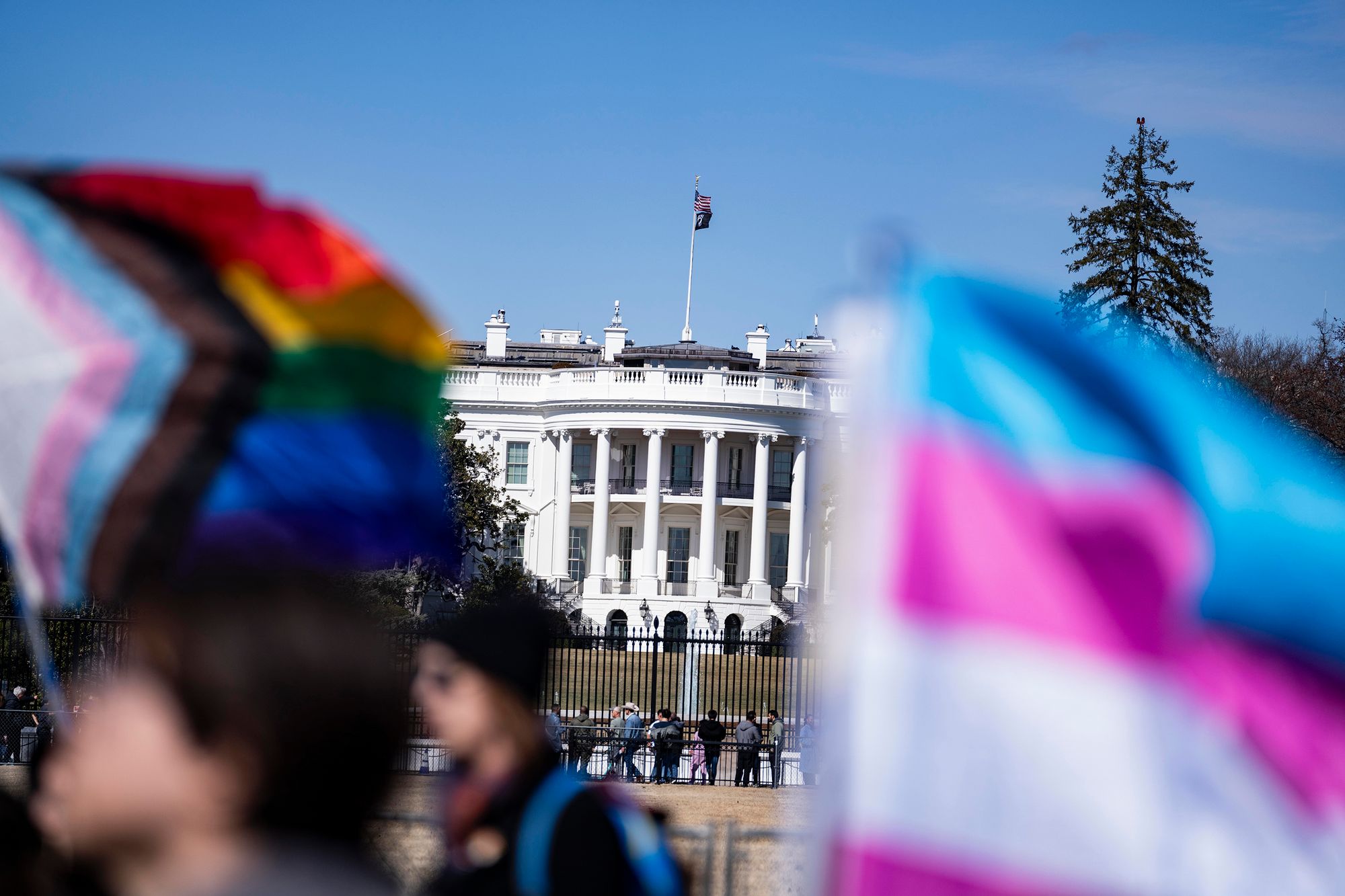
In an Executive Order issued hours after his second inauguration in January 2025, President Trump waded into the definition of sex and gender (White House 2025). The Order defines a female as someone who, at conception, is destined to produce the “large reproductive cell” and a male as someone destined to produce the “small reproductive cell.” The Order declares that gender is an “ideology.” The Order instructs every Federal agency to use the term “sex” and not “gender” in official documents and to reverse the gender marker on passports of transgender people. The Order denies the existence, even the possibility, of transgender people.
The US Order was followed in April 2025 by a unanimous ruling from the UK Supreme Court that the terms "woman," "man," and "sex" in the Equality Act of 2010 refer to biological sex, meaning "biological woman" and "biological man." This unanimous decision held that a person's sex, for the purposes of the Act, is the sex they were at birth, not their gender identity. The ruling excludes transgender people from using gender-appropriate bathrooms.
Previously, in 2023, Vladimir Putin in Russia signed legislation that bans people from officially or medically changing their gender. The act bans changing a person’s gender in official documents or public records, and annuls marriages in which one person has changed gender. It bars transgender people from becoming foster or adoptive parents.
The US, UK, and Russian governments collapse gender into sex, and preserve a binary for gender that derives from the large/small binary in gamete size.
As scholars, we might hope to comfortably explore the evolution of sexual reproduction across obscure plants and animals that the public has never heard of. However, sex and gender pose a topic on which we scholars must presently speak truth to power, as we have on other topics in the past. Not only that, but the general public is genuinely confused about what sex and gender are. Lawyers say one thing, politicians another, religious leaders still another, medical experts still more, activists even more, and gender theorists weigh in too.
As scholars, we have to clarify this situation. As scientists, we know a lot about sex and gender. But we need to get our message straight. We must choose what to oppose and what to let stand. We don’t have a blank slate to write upon. The US, UK, and Russian governments have inscribed definitions of sex and gender onto our slate and have officially acted accordingly. To be effective, we must work with and around the officially stipulated definitions.
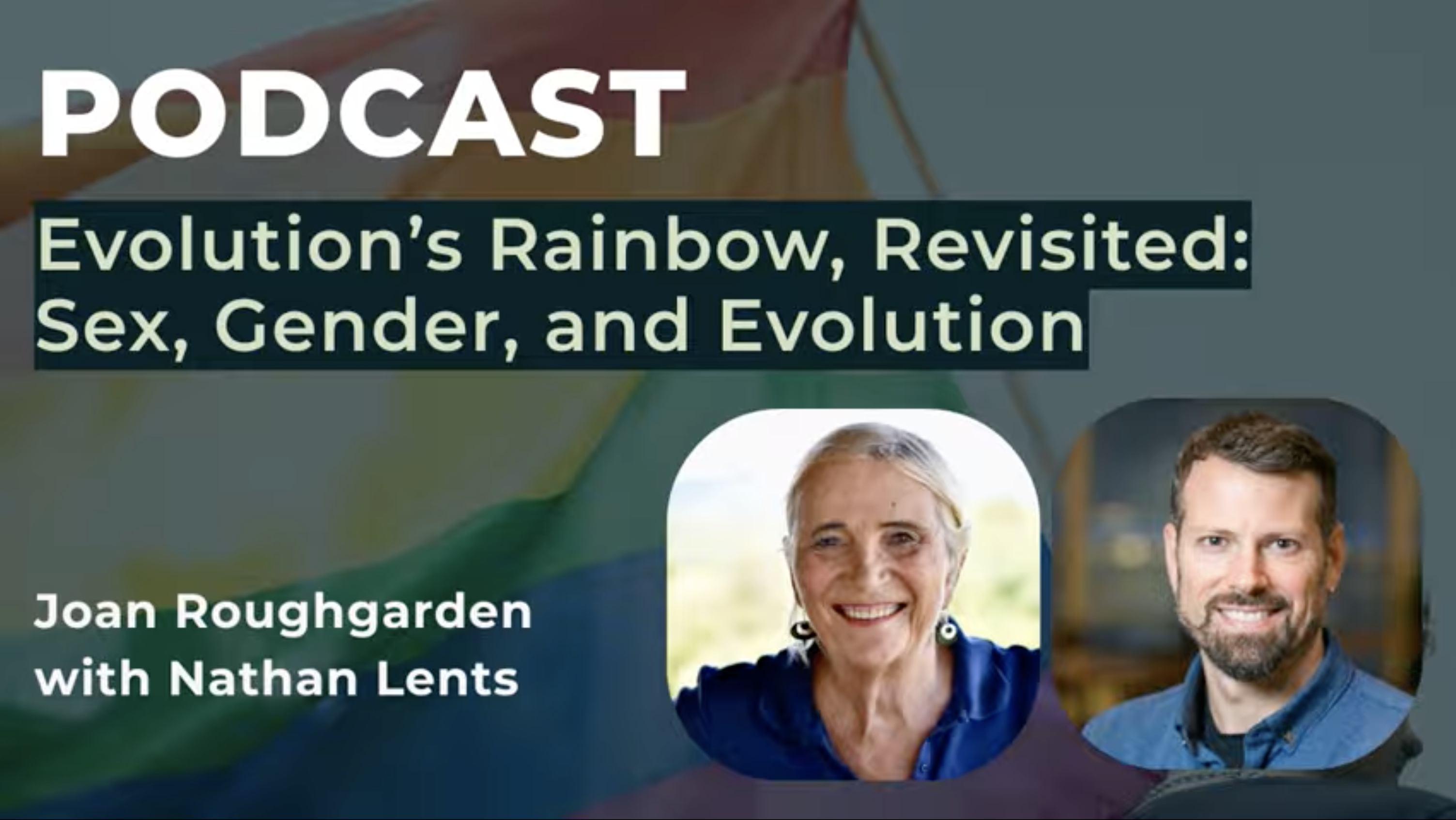
As of this writing, four papers belong to this series. There are articles by Agustin Fuentes and Nathan Lents, Melina Packer and Ambika Kamath, Patricia Brennan and Anne Fausto-Sterling, with more expected in the future. These articles already engage what I think are the major issues facing the evolutionary study of sexual reproduction.
The elephant in the room is the definition of sex. A priori, there are two ways to go.
One way rejects a definition of sex as binary. Three of the manuscripts in this series so far take this tack. As Fuentes and Lents write, “sex can be a complex mixture of anatomy, physiology, and behavior.” Fausto-Sterling writes of “four sexes” when referring to the multiple male morphs in ruffs, a European ground-nesting shore bird. Packer and Kamath refer to evolutionary biology’s “liberation from the limitations of binary sex.” In contrast, Brennan does not define sex, but provides intriguing examples of how social context influences the development of genital morphology in species of birds, reptiles and mammals.
The other way accepts a definition of sex as binary. Sex consists of male individuals who make only sperm, female individuals who make only eggs and hermaphrodite individuals who make both eggs and sperm such as most plants and many marine animals. Bodies and behavior are lumped into gender. Sex is gametes; all the rest is gender.
I’ve taken this second approach in my writings (Roughgarden 2004, 2009). For me, ruffs do not have four sexes; they have four genders. I discuss the ruff example along with others under the heading of “gender multiplicity.” I see no qualitative difference between the evolutionary construction of gender, the hormonal construction of gender, and the social construction of gender—these differ in mechanism, not in purpose, namely, to equip a body that has one and/or the other size of gamete with capabilities to successfully deliver offspring to the next generation. This second approach invests in the concept of gender all the phenotypic variation that males, females, and hermaphrodites exhibit within and across species.
What are the pros and cons of rejecting vs accepting a sex binary based on gamete size?
First, a program to destabilize the binary defined by gamete size will fail. It already has. The White House Executive Order, the UK Supreme Court ruling, and the Russian law enunciate a definition of sex based on the gametic binary. There’s no going back. In the US, many in the general public protest the government’s actions concerning foreign tariffs, methods of deportation of non-citizens, and other authoritarian actions. But they do not protest how the Order defines sex. In fact, many in the public are skeptical of what the media describe as gender ideology, and they support returning to a common sense reaffirmation of sex as a binary, albeit using the remote criterion of gamete size. And if challenged, a White House lawyer can correctly cite the precedent of thousands of papers over many decades in the scientific literature spanning Botany, Zoology, and Evolutionary Biology that employ the gamete-size definition. The gamete size definition works for seaweeds to sea lions. Nor are scientists themselves obviously amenable to abandoning the gamete-size definition of sex. Saying that sex is complex, that sex is a spectrum, that sex is bimodal, and so forth muddies the matter. Instead, we can build on the clarity of an underlying gamete-size definition of sex while unpacking gender to include diversity in body and behavior.
Second, a program to expand gender beyond humans to other species will succeed. We can succeed in splitting off gender from sex. We can successfully defend the proposition that gender is not a binary, even if sex is. We can exhibit adaptive evolutionary, developmental, and social mechanisms that blur and even erase the underlying binary of the gametes. I envision future synthetic articles with tables laying out the morphological and behavioral diversity of gender across species and habitats, together with the intricate mechanisms that produce this diversity. I envision a forthcoming evolutionary theory of gender. And this approach is accessible to the general public (Roughgarden and Veale 2025).
Saying gender is different from sex is not new or radical. Scholars in the humanities and social sciences have been saying this for decades. Why not expand this perspective beyond humans? Although the White House can successfully declare that sex is binary, will they get away with collapsing gender into sex, too? Doubtful. No White House lawyer can point to academic precedents saying that gender is identical to sex—to the contrary, academic precedent favors distinguishing these. Nor will the general public likely insist on treating gender as binary in the face of obvious variation in how men and women look and act in their own and other cultures, provided we leave the underlying sex binary alone. And we can truthfully say that gender is complex, that gender is a spectrum, that gender is bimodal, and so forth. At the same time, we can also validate and publicize the varied expressions of body and behavior that our biological and cultural studies reveal, all as components of an expanded understanding of gender.
Now we come to the mastodon in the room—the explanatory system that accounts for the evolution of sex, gender, and sexuality.
Darwin's (1871) theory of sexual selection has been expanded over the years into a large system of interlocking hypotheses to explain many features of sexual reproduction ranging from why sexual reproduction exists to begin with, what roles males and females play during their lives, whether male and female relations are based on conflict, the division of labor in raising offspring, the role of gender minorities and so forth. The sexual selection system focuses on the criterion of mating success and relies on processes featuring bad genes, selfishness, competition, conflict, coercion, ownership, and deceit. Indeed, Fausto-Sterling explicitly refers to a morph of male ruffs as “sneaky fuckers.” This gratuitous and inaccurate disparaging of gender diversity is rampant throughout the sexual-selection literature. In my judgement, the sexual selection/selfish gene framing is theoretically flawed, doesn’t fit the facts, and is a political project that reinforces genetic classism.
I have championed an alternative explanatory system, social selection, that focuses on offspring delivery rather than mating success and relies on processes featuring negotiation, teamwork, and division of labor. A deep-dive comparison of social and sexual selection appears in Roughgarden (2025).
Going forward, the academic task is to produce a scientifically correct framework for explaining sex, gender, and sexuality. My view is that the social selection framework, rather than the sexual selection framework, provides correct explanations. However, future research might show it to be inadequate and that some third option is needed.
The timely and spirited essays in this series promise to engage scholars from many disciplines in the exciting project of rethinking the science of sex and gender, a project that will provide guidance for the foreseeable future.
References:
Darwin, C. (1871) The Descent of Man. (2nd Ed.) Prometheus Books, Amherst NY (facsimile edition)
Roughgarden, J. (2004) Evolution’s Rainbow: Diversity, Gender, and Sexuality in Nature and People. University of California Press. Berkeley CA.
Roughgarden, J. (2009) The Genial Gene: Deconstructing Darwinian Selfishness. University of California Press. Berkeley CA.
Roughgarden, J. (2025) Explaining Sex: Contrast Between Social and Sexual Selection. Biology of Sex Differences. Accepted pending revision.
Roughgarden, J. and J. Veale (2025) Transgender is not ideology. Open Forum (Op-ed), San Francisco Chronicle, to appear Nov. 17 2025.
White House (2025), Executive Order #13988, Sects. 2b, 2c, 2f, 2g, 3c, and 3d.